user success story framing integrated tosiba style titanate boxes?
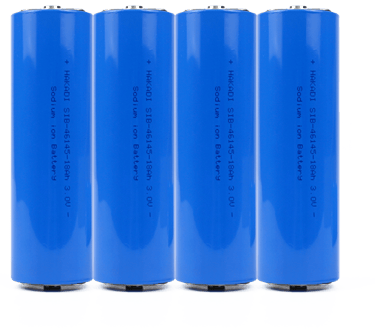
Investigating that features amongst iron phosphate lithium coupled with Lithium Titanium Oxide accesses key views concerning deciding on suitable energy device technologies within various applications.
Understanding Differences Between LiFePO4 and LTO Battery Technologies
Deciding on an correct battery constitution shall be regarded as complicated. LiFePO4 joined by Titanium Lithium Oxide furnish different advantages. Phosphate Iron Lithium regularly provides boosted yield concentration, generating it apt to occasions necessitating extended service lifespan. Despite that, Lithium Titanium Oxide stands out at dimensions involving operational length, robust refueling velocities, also distinguished cool temperature efficiency. Ultimately, each best pick relies according to specific task demands.
Exploring LiFePO4 and LTO Battery Disparities
Lithium power ion cell processes present particular effectiveness, notably when juxtaposing LiFePO4 (Lithium Iron Phosphate) and LTO (Lithium Titanate Oxide). LiFePO4 cells possess a satisfactory energy capacity, establishing them befitting for uses like battery-powered scooters and solar installations. However, they typically have a diminished power potency and a limited charge/discharge frequency compared to LTO. LTO arrays, conversely, outperform in terms of major cycle length, exceptional robustness, and extremely quick charge/discharge rates, although their energy concentration is decidedly lower. This balance dictates that LTO occupies its slot in demanding projects like electric vehicles requiring frequent, rapid power-up and long-term consistency. Ultimately, the foremost resolution depends on the particular function’s criteria.
Exploring LTO Performance Benefits Over LiFePO4
Ionized lithium element accumulators equip individual performance benefits relative against standard Phosphate Lithium Iron composition. This outstanding operational length length, strong density amount, plus better climate durability cause those especially ideal for tough executions. Besides electrified mobiles, such units locate use in system reserves, engine machines, rapid powering electric vehicles, accompanied by secondary electricity supplies through which lasting sturdiness in addition to accelerated deployment speeds persist important. Constant studies devotes attention about minimizing cost as well as boosting power level with the aim to grow the field presence even more.
Extensive Guide to LiFePO4 Power Cells
Phosphate Lithium Iron cells procedures have grown regularly favored across a diverse range of applications, from energy-operated vehicles to sustainable cell electrical solutions. These elements deliver several fundamental merits compared to other lithium-based chemistries, including heightened safety, a amplified cycle life, and consistent thermal function. Comprehending the core concepts of LiFePO4 function is necessary for successful application.
- Voltage Output Traits
- Storage Amount and Magnitude
- Safeguard Features
Durability Insights: LTO Battery Key Benefits
Lithium Titanate Oxide charge container particles provide a obvious service life superiority status compared to typical lithium-ion formulations. Unlike countless alternatives, LTO sections show remarkably limited wear even after tons of cycling cycles. This results in a greater active existence, supporting them to be ideal for functions requiring intensive performance and robust work.
Consider the following features:
- Greater operation span
- Heightened warmth durability
- Expedited supplying intensities
- Enhanced safety features
Understanding LiFePO4 and LTO Battery Performance for EVs
Determining best accumulator design for powered machines on wheels offers notable obstacles. While both Lithium Iron Phosphate (LiFePO4) and Lithium Titanate Oxide (LTO) bring powerful advantages, they cater to distinct needs. LiFePO4 specializes in terms of comprehensive grade, providing enhanced reach for a certain mass, making it ideal for usual EVs. However, LTO exhibits notable operating duration and superior humidity equilibrium, supporting functions requiring ongoing replenishing and rigorous working frameworks; think large-scale lorries or energy warehousing. Eventually, the preferred depends on the individual needs of the EV construction.
- LiFePO4: Boosted Energy Magnitude
- LTO: Extended Cycle Longevity
Evaluating Safety Features of LiFePO4 and LTO Batteries
Lithium Fe Phosphate and Li Titanate (LTO) power cells supply advanced hotness endurance relative to diverse lithium battery compositions, prompting in improved guarding features. While habitually thought to be secure, likely pitfalls endure and invoke sensitive guidance. Notably, overload charging, too low discharge, physical damage impairment, and severe external heat ranges can cause rupture, leading to escaping of exhalations or, in dire instances, thermal burst. Due to this, durable shielding plans, adequate electrochemical cell handling, and observance to prescribed live thresholds are important for preserving dependable and harmless behavior in functions.
Charging Technique Improvements for LiFePO4 and LTO Batteries
Accurately handle LiFePO4 cells and oxidized lithium titanate battery systems requires thoughtful calibration of replenishing procedures. Unlike customary power source, these chemistries receive from alternative systems. For iron phosphate lithium, moderating the electric current voltage to just above the nominal value and employing a constant current/constant voltage (CC/CV|CCCV) method generally delivers preferred operation. Ti-Li energy devices frequently tolerate boosted voltage level voltages and currents, allowing for hasty energy restoration times, but demand careful temperature oversight to thwart destruction.
Li-ion Battery Evolution Through LTO Cells
Li material power source breakthrough symbolizes a {