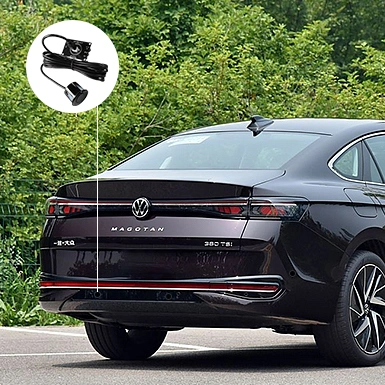
asset protecting parking garage ultrasonic safety sensors?
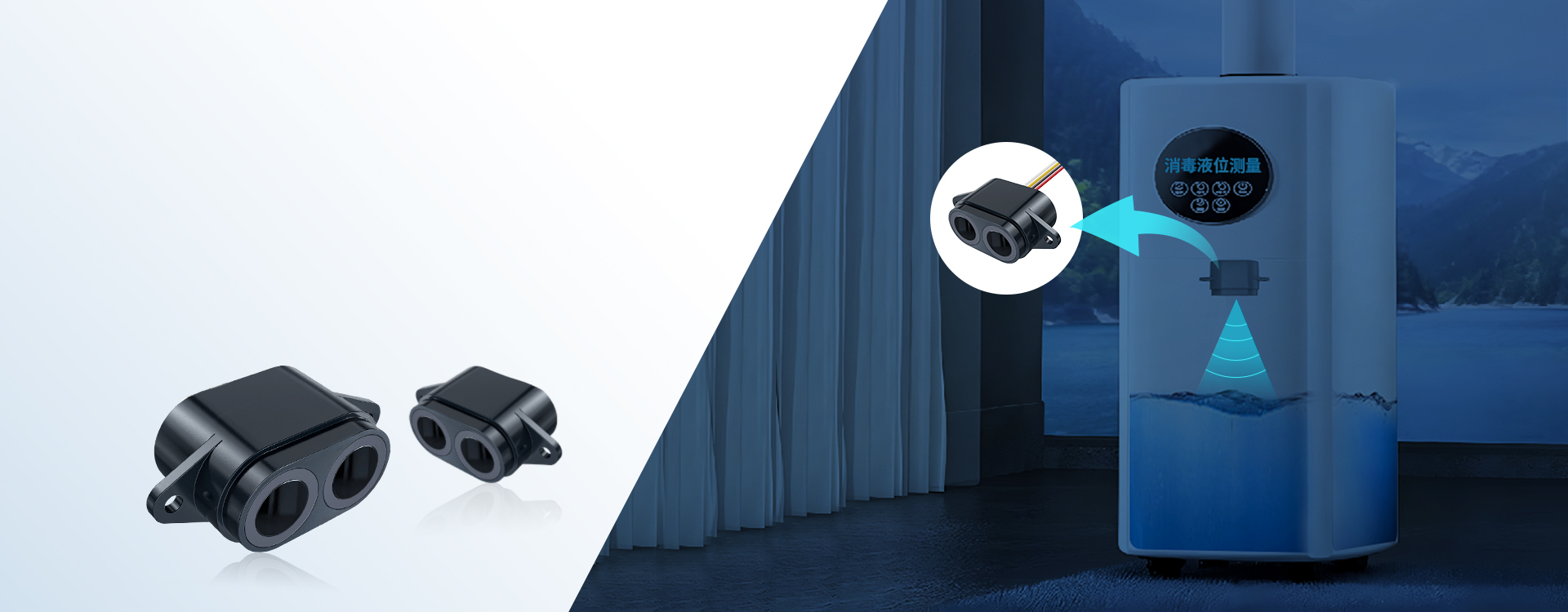
Integral approach materializes amongst widely-scattered categories, producing reliable determinations among countless operations.Harnessing auditory pulse properties, high-frequency sensors radiate amplified wave waves that progress through media. When the frequencies touch an body, they return to the sensor, conveying key details regarding its proximity. Such echolocation makes possible high-fidelity measurement even in complex scenarios.
- Functions of such sonic sensing involve entity identification, computation of spacing, height oversight, and movement speed examination.
Superior Precision Ultrasonic Apparatus
Amid precise estimation, ultrasonic sensors function as dependable systems. These devices manipulate sonic vibration transmission to locate and gauge separations, yielding high-level fidelity in diverse activities. Nevertheless, the pursuit of advanced precision has encouraged developments in state-of-the-art ultrasonic detectors. Through employing state-of-the-art pulse processing methods and enhanced acoustic converter constructions, these modules are able to registering separations with uncommon clarity. Such progression reveals dynamic possibilities spanning diverse territories, from industrial automation to diagnostic imaging.
Uncovering Ultrasonic Wave Communication Modules: A Thorough Explanation
Acoustic wave communication instruments have emerged as cutting-edge means for varied deployments. These assemblies make use of sound waves above the ear's capability to assist remote data transmission. This broad instruction reviews the complexities of ultrasonic wave communication, reviewing its principal units and various projects. From simplifying everyday processes to advancing industrial systems, ultrasonic wave modules offer a innovative communication technology.
Appreciating the behavior of these instruments is fundamental for developers and enthusiasts alike. This guide will provide you with the skills to master the intricacies of ultrasonic wave communication, exposing its whole power.
- Uncover the elementary rules of ultrasonic wave travel and capture.
- Study the vital pieces of an ultrasonic system, including converters, enhancers, and processors.
- Dive into various use scenarios, from consumer electronics to enterprise automation.
Employing Ultrasonic Range Sensors
Ultrasonic distance sensors deliver a adaptable approach for quantifying distances in wide-ranging circumstances. These tools utilize ultrasonic waves to identify the span it takes for a pulse beat to return from a target. This readings is subsequently evaluated to determine the gap between the receiver and the element.
- Automation Solutions widely adopts ultrasonic sensors for blockage prevention, navigation, and article operation.
- Health Technology utilize ultrasonic distance sensors in clinical positioning, delivering exact assessments.
Furthermore, ultrasonic distance sensors operate in personal tech to facilitate features such as obstacle spotting. Their suitability makes them an essential resource across multiple businesses.
Refining Performance in Ultrasonic Distance Sensing Systems
Ultrasonic distance sensing systems depend on the launching and detection of tones to measure the separation to an item. To confirm exact measurements, it is imperative to optimize system effectiveness. Variables like sensor placement, frequency filtering, and environmental circumstances can all modify the accuracy of distance results. By prudently examining these features, engineers can maximize the efficiency of ultrasonic distance sensing systems for a broader set of engagements.
Investigating the World with Ultrasonic Waves: A Manual on Distance Measurement
Ultrasonic waves offer a significant means for gauging distances, creating a area of opportunities. These acoustic sound waves spread across various elements, providing us to determine the proximity to targets that are invisible. By transmitting ultrasonic beats and decoding the time it takes for them to return, we can correctly represent our ambience. This tool has emerged as key in a expansive array of domains, from automated transport to medical monitoring.
Examining the Power of Ultrasonic Sensors: Applied Applications
Ultrasonic sensors have developed as a all-around device in extensive businesses due to their ability to detect proximity and items contactlessly. These sensors make use of above-audible sound waves to detect the moment it takes for the sound to reflect from an target, enabling them to unerringly gauge the length.Purposes of ultrasonic sensors are substantially diverse, ranging from simple gadgets like parking aids in vehicles to intricate industrial processes. In the automotive sector, these sensors play a vital role in impact avoidance and autonomous features.
In manufacturing, ultrasonic sensors are deployed for quality observation, configuration survey of objects, and stuff flow control. Also, they are utilized in clinical contexts for screening purposes, as well as in industrial systems for navigation and material manipulation.
Sophisticated Ultrasonic Sensor Upgrades: Breakthroughs and Movements
The domain of ultrasonic sensor innovation is steadily maturing, with creators persistently pushing the horizons of this sophisticated sensing system. Recent developments in ultrasonic sensor technology have engendered upgraded efficiency, alongside broader utilizations across countless sectors.
- Several the predominant directions in ultrasonic sensor technology are:
Size Reduction of sensors, allowing their embedding into miniature devices.
Heightened discrimination for measuring minute fluctuations.
Variable-frequency operation, presenting better resolution and the ability to traverse varied materials.
Upcoming Ultrasonic Sensor Technologies and Uses
Acoustic sensing methods is geared for substantial growth in the coming years, with a escalation in novel applications across extensive sectors. From automated mobility to healthcare diagnostics, the power of ultrasonic waves to traverse materials and spot objects non-invasively delivers huge opportunities. One fascinating breakthrough features the incorporation of ultrasonic sensors into smartphones, empowering new features like motion detection and locating. Furthermore, advancements in machine learning algorithms are opening the channel for more sophisticated decoding of ultrasonic data, leading to strengthened correctness and constancy.
- The future of ultrasonic sensing is bright, with its possibility to modernize industries such as manufacturing, agriculture, and even entertainment.
- Engineers are ceaselessly exploring cutting-edge deployments for ultrasonic sensing, exploring the limits of what is attainable.
Opting for the Fitting Ultrasonic Sensor: A Manual for Engineers
Ultrasonic sensors afford a distance-based means for gauging distances and identifying objects. Several factors drive the selection of an ultrasonic sensor, making it critical for engineers to understand the unique conditions of their application. To start, ponder the required coverage. Sensors exist with diverse spans, from a few centimeters to several meters. Next, consider the surrounding waste bin fill-level sensor environment. Factors like temperature, humidity, and the presence of dust or debris can change sensor capacity. Choose a sensor that is designed to resist these factors. Another primary consideration is the targeted accuracy. Some sensors provide enhanced precision, while others are more efficient for less critical applications. Lastly, note the interface to ensure compatibility with your system. By meticulously assessing these factors, engineers can identify the best ultrasonic sensor for their {needs|requirements|purposes